
Photo by Oliva Grigorita's Images via Canva.com
In this article:
Updated 2026
Preparing to buy a home involves more than dreaming about the perfect kitchen or imagining which room will be the office. It starts with understanding one’s current financial position and taking steps to be set up for success before exploring home financing options.
How to Build Credit
Checking personal credit reports at least once a year is one of the first steps to purchasing a house. Requests made directly through a credit agency are free and won’t lower credit scores.
Keep the following in mind when reviewing personal financial accounts.
Pay Down Debt
Focus on reducing balances rather than transferring them between accounts. Paying off debt can improve your credit and motivate better financial habits.
Think Carefully Before Closing Accounts
Closing unused accounts won’t instantly remove them from a credit report, and it may temporarily affect your credit score. However, if a card has a high interest rate or encourages overspending, it might be worth closing.
Avoid Opening Multiple New Accounts
Each credit inquiry can slightly lower your credit score, and new accounts increase your monthly obligations.
A higher credit score can lead to lower mortgage rates and smaller monthly payments. This makes any efforts to improve credit scores well worth it. Using a debt payoff calculator can help home buyers review how quickly they can pay off their balances and improve their credit score.
How to Build Savings
Buying a home is a major financial commitment, so it’s important to have a realistic understanding of personal savings.
A solid savings reserve should cover several key expenses. This includes earnest money to demonstrate buyer commitment, a down payment to reduce monthly mortgage costs, and closing costs required to finalize the purchase. Buyers may also need funds for immediate renovations such as painting or new carpeting. And don’t forget emergency funds—ideally three to six months of take-home pay, though even one month can provide flexibility.
Having confidence that personal savings can handle these costs will make the home-buying process less stressful. If the funds aren’t quite there yet, it’s okay to wait and save more before taking the next step. A realistic budget can help guide savings and keep a home buyer on track.
How to Go from Saving to Financing
Once your credit and savings are in order, the next step is figuring out how to pay for your new home. Unlike everyday purchases, buying a home involves multiple loan options, varying mortgage rates, and important financial decisions.
How Do You Get Prequalified for a Mortgage?
After reviewing credit standing and savings, the process moves to prequalification, which differs from a more detailed mortgage preapproval and provides an estimate of potential borrowing capacity.
“Mortgage pre-qualification is the first step in the process, and it will give you an idea of how much money you might qualify for on your home loan. This estimate is based on customer-provided information, not on fact checks. It's mainly there for you to consider as you set a house-hunting budget, not to give you the momentum to put in an offer on your dream home.” -Mortgage Pre-Qualification vs. Pre-Approval: Key Differences.
Prospective homebuyers should first contact a mortgage lender to submit their information. If the buyer is already working with a real estate agent, they’ll have a few names to share. Otherwise, family and friends may also have recommendations.
During the conversation, the lender will ask questions related to income and personal information, how much the homebuyer wants to borrow, and how much they plan to put down.
There are some online prequalification calculators, but the results may be confusing for first-time homebuyers. By starting with a phone call, new homebuyers can have answers the same day.
Following the steps to purchasing a home, the homebuyer then finds a property to make an offer on, and then it's time to submit more information for a final look at finances to apply for a mortgage preapproval.

Photo by Africa images via Canva.com
Understanding the Different Types of Home Loans
Whether a service member plans to stay in the house long term, sell when PCS orders arrive, or even turn their property into an investment, the right home financing options can make all the difference. Also, reviewing current VA home loan rates can help service members and veterans understand their potential home financing options.
Following are the main types of home financing available to military homebuyers.
Conventional Loans
Conventional loans are loans not offered by the government. Within these types of loans, there are two main options: conforming and non-conforming.
Conforming loans are any type that don’t exceed Fannie Mae and Freddie Mac’s guidelines.
In 2026, the conforming loan limit for a single-family home is $832,750. However, it can be higher in some expensive housing markets, such as Alaska and Hawaii, where conforming loans max out at $1,249,125. (NerdWallet)
Non-conforming loans that exceed the conforming limit are considered non-conforming. These loans are best for borrowers with unique financial circumstances and a less-than-perfect credit score. While there’s a fluctuation in lender rates, there’s almost a guarantee of higher interest rates, as the lender assumes a larger risk, with an increased amount borrowed.
A jumbo loan is a mortgage used when a home’s purchase price exceeds the conforming loan limits set by Fannie Mae and Freddie Mac. Jumbo loans are non-conforming, but not all non-conforming loans are jumbo loans. Because these loans are larger and cannot be sold to those agencies, they carry more risk for lenders and typically require higher credit scores, larger down payments, and stronger financial qualifications than conventional conforming loans.
Government-Backed Home Loans
Government-backed loans are guaranteed by federal agencies, which reduces risk for lenders and can make homeownership more accessible for some buyers. These loans often have more flexible credit requirements or lower down payment options compared to conventional loans.
The FHA Loan
The Federal Housing Administration funds FHA loans. This loan requires a down payment of as little as 3.5% of the home’s price, making it attractive to first-time homebuyers. However, it’s important to note that FHA loans require mortgage insurance, which increases the overall cost of the loan over time.
2026 requirements for an FHA loan:
- FICO® score of at least 580 = 3.5% down payment
- FICO® score between 500 and 579 = 10% down payment
- MIP (Mortgage Insurance Premium ) is required
- Debt-to-Income Ratio < 43%
- The home must be the borrower's primary residence
- The borrower must have a steady income and proof of employment
The VA Home Loan
“In 1944, the U.S. Department of Veterans Affairs created the VA loan as part of the Servicemen’s Readjustment Act to assist WWII veterans with establishing homeownership. President Roosevelt signed the act with the hope that service members would come home and begin to establish new lifestyles after sacrificing so much during the war effort.” -What Is a VA Loan?
Today, the government has funded more than 25 million VA loans, and it remains one of the most powerful programs for helping active-duty service members and veterans achieve homeownership.
The VA loan offers favorable interest rates, zero down payment, reduced closing costs, no prepayment or early pay-off fees, and private mortgage insurance is not required.
VA loan eligibility includes active-duty members with a statement of service, Veterans with the Certificate of Release or Discharge from Active Duty Form DD214, and spouses of military members who’ve died on active duty or as a result of a service-connected disability.
The USDA Loan
“The USDA loan’s purpose is to provide affordable homeownership opportunities to low-to-moderate income households to stimulate economic growth in rural and suburban communities throughout the United States.” -USDA Loans
Borrowers can apply for a USDA loan without a down payment and with reduced interest rates.
USDA loan eligibility includes the following requirements:
- U.S. citizenship or legal permanent resident (U.S. non-citizen national or qualified alien)
- Ability to prove creditworthiness, typically with a credit score of at least 640
- Stable and dependable income
- Ability to repay the mortgage—usually 12 months of no late payments or collections
- Adjusted household income is equal to or less than 115% of the area median income
- The property serves as the primary residence and is located in a qualified rural area
back to top
Fixed-Rate vs. Adjustable-Rate Mortgages
Fixed-Rate Mortgages
The fixed-rate loan is one of the most popular lending options because the interest rate doesn’t change over the typical 15 or 30-year life of the loan. Since the interest rates are immune to market fluctuations, they offer predictability and stability. This also makes for easy budgeting. Borrowers have the option to refinance if the interest rate drops significantly.
A fixed-rate mortgage is best for homeowners who plan to be in the home for the majority of the loan, since equity usually takes longer to build.
Adjustable-Rate Mortgage
Adjustable rate mortgages, or ARMs, are also referred to as hybrid loans because they contain a mix of fixed and adjustable rates. Although an ARM’s interest rate may initially be lower than a fixed-rate loan, the interest will fluctuate to reflect the national interest rate at that time.
If the current interest rate is more than the initial rate, the payments increase. If it’s lower, the payments decrease. The change periods are predetermined, often about five to seven years, and they have minimum and maximum rate restrictions to control the size of the adjustment.
It’s common to see ARMs described in this way:
- 7/1 ARM: loan has a fixed interest rate for the first 7 years, then adjusts annually.
- 5/1 ARM: loan has a fixed interest rate for the first 5 years, then adjusts annually.
- 1-year ARM: loan has a fixed interest rate for the first year, then adjusts annually.
“Most banks will start an ARM at a lower interest rate since you are absorbing the market’s shifts. If you plan to only own the home for a few years before selling it (because you’re military and move frequently), you may not even feel a shift in the market—the chances of an astronomical increase in the market within the few years you plan to own the home are minimal.” -Pros & Cons of an Adjustable Rate Mortgage for Military Homebuyers.
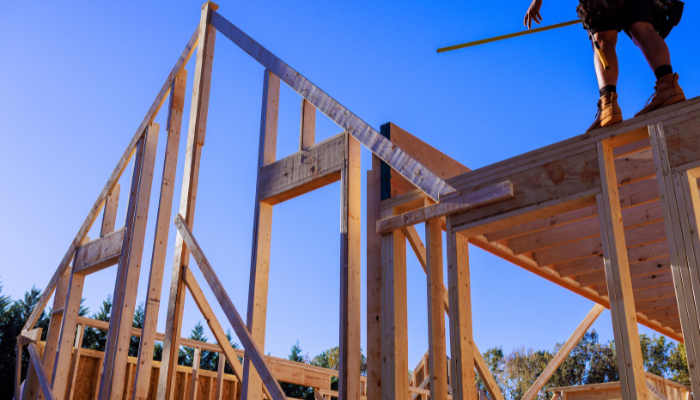
Photo by valentynsemenov via Canva.com
Other Types of Home Financing
Construction Loans
Construction loans are created to fund the construction of a new home. These loans typically involve a higher interest rate and a shortened lifespan (usually a year for the time it takes to build the property).
There are three primary types of construction loans:
- Construction-to-permanent loan finances the construction of a primary residence, and it automatically converts to a permanent loan after the completion of the home’s construction.
- Construction-only loan covers the cost of building the property, but the loan requires the homeowner to either pay the debt in full at the end of the term or get another mortgage.
- Renovation loan allows the homeowner to borrow money to make improvements and updates to a preexisting property.
Interest-Only Mortgage
With an interest-only mortgage, monthly payments are only enough to cover the interest for a fixed period. Then, the homeowner is required to pay off the full sum either as one big lump or with revised, and usually increased, monthly payments that have higher interest rates. This type of financing makes it harder to earn equity, and it takes longer than other, more traditional home loans.
Balloon Mortgages
Balloon mortgages begin with low or no monthly payments. Then, like the interest-only mortgage, at the end of a set amount of time, they require a large payment to pay off the remaining loan amount. This type of loan is most often used by those who are confident that they’ll be moving on and selling the property in a few years.
Owner Financing
When the buyer finances the property directly through the seller, instead of obtaining a conventional home loan, it’s called owner financing.
“With owner financing, also called seller financing, the seller doesn’t hand over any money to the buyer as a mortgage lender would. Instead, the seller extends enough credit to the buyer to cover the purchase price of the home, less any down payment, and then the buyer makes regular payments until the amount is paid in full. The buyer signs a promissory note to the seller, which spells out the terms of the loan, including the interest rate, repayment schedule, and the consequences of default. The owner sometimes keeps the title to the house until the buyer pays off the loan.” -The Pros and Cons of Owner Financing
These deals are often short-term, and they can end in a balloon payment. The purpose is to allow the buyer time to get their finances in order so that they may qualify for a traditional loan.
Choosing the Right Home Loan
With so many options, new homebuyers want to choose the loan that’s right for them. They can start by running their numbers through an online home loan calculator.
The next step is to determine what is most needed. If the homebuyer is a service member who plans to sell in a few years when they PCS to their next duty station, they might prioritize a loan that starts with lower payments. Then they can most likely avoid the big balloon payment required further down the road.
However, they risk assuming more debt if the home doesn’t sell as planned. For eligible military and veteran buyers, looking at VA home loan rates alongside other options can help you make an informed decision.
If a homeowner plans to hold on to the home indefinitely, maybe turning it into a rental investment property, then a mortgage with a higher monthly payment and less interest overall might be best. This setup often allows the homeowner to build equity faster.
When considering a home loan, compare these basics:
- Loan life
- Interest rate/annual percentage rate (APR)
- Total amount
- Monthly payments
There are many financing options available when buying a home, and some loans are better than others depending on personal circumstances. After building credit, growing savings, and reviewing loan options, it’s time to start searching for homes with MilitaryByOwner. Our homebuying resource page also provides additional free information on how to buy a house.
MilitaryByOwner has helped military families navigate housing and relocation decisions since 2000. Explore additional PCS resources, military housing guides, and relocation tools designed specifically for military life.

back to top