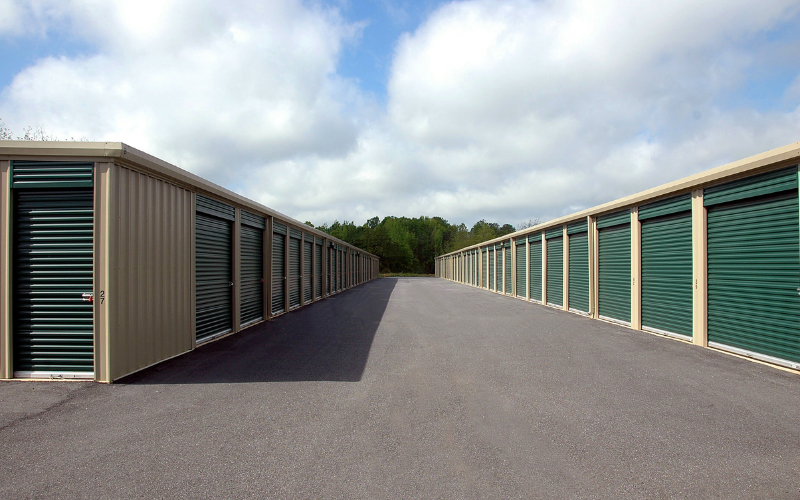
Photo by paulbr75 from pixabay via Canva.com
In this article:
Updated 2026
A PCS move, especially an OCONUS PCS, often means leaving some belongings behind. Smaller military base housing, reduced household goods allowances, and overseas restrictions can make bringing everything impractical. For many military families, non-temporary storage (NTS) is the solution.
What Is Non-Temporary Storage?
For some PCS military moves , the government stores a portion of a service member’s military household goods shipment while they fulfill their tour at the next duty station. This type of holding is called non-temporary storage (NTS).
For an overseas move, the storage facility will likely be near the pack-out location, where the household goods will stay during a service member’s overseas tour. After returning to the continental United States, they can request the delivery of their stored household goods.
The process sounds simple enough, but there’s a lot to consider before deciding whether to use long-term storage. For example, eligibility for NTS depends on the destination and years of service. Each rank is assigned a maximum household goods weight allowance, known as a weight entitlement.
Understanding Weight Entitlements
Before deciding what to ship, store, sell, or hand-carry overseas, it’s important to understand how PCS weight entitlements work. These allowances determine how much household goods weight the government will move at no cost to the service member, and they can vary depending on the details of the assignment.
“The average weight allowances for a PCS are based on rank, dependency status and move type. Special circumstances, like moving overseas/OCONUS, a retirement move or a separation move, may have extra entitlements and/or limitations. Each branch of service may also offer different allowances too, so be sure to review the Joint Travel Regulations and check with your local transportation office to confirm these amounts.” –MilitaryOneSource
Some overseas locations have administratively reduced household goods allowances, which can impact how much a service member is allowed to ship and store.
OCONUS duty stations with administratively reduced HHG allowances:
- Alaska, Dutch Harbor
- Australia, Alice Springs (not including Detachment 421/LGN personnel) and Learmonth
- Bahrain
- British Indian Ocean Territory, Diego Garcia
- Greece, Souda Bay
- Japan, Akizuki (Hiroshima) and Kure
- Japan, Camp Zama
- Japan, Combined Arms Training Center Fuji
- Japan, Marine Corps Air Station (MCAS) Iwakuni
- Japan, Okinawa
- Japan, Torii Station
- Korea (not including Chinhae, Osan, and Detachment 452 Wonju)
- Korea, Mujuk
- Kuwait
- Poland, Redzikowo
- Portugal, Azores, Lajes Field
- Qatar, Al Udeid Air Base
- Romania, Deveselu
- Saudi Arabia, Eskan Village (U.S. Military Training Mission)
- Thailand
- Turkey, Incirlik Air Base
Sample PCS and NTS Weight Allowances:
- E4 with dependents: 8,000
- E6 with dependents: 13,000
- O2 with dependents: 13,500
- O5 with dependents: 17,500
When preparing for an overseas move, it’s important to remember that NTS counts toward the overall weight entitlement. Service members should not accumulate more than their allotment, or they will owe the difference.
That said, special circumstances may allow larger entitlements. To verify current weight allowances, connect with your local transportation office.
Get ready for your military move with these expert tips: Everything You Need to Know Before Your First PCS Move.

Photo by Monkey Business Images via Canva.com
Questions to Ask Before Choosing NTS
Before deciding what to place in non-temporary storage, there are a few questions to consider.
- Does my new duty station have reduced household goods allowances?
- Will storing these items make overseas living easier, or will I need them?
- Would replacing these items later cost more than storing them now?
- How much of my total weight allowance will remain for the shipment I'm taking overseas?
- Am I storing this because I truly need it later or because I haven't decided whether to keep it?
- If I don't use or miss this item for several years, would I still want it when I return?
How Does Non-Temporary Storage Work?
There are rules and guidelines that movers and storage facilities must follow, but there are variations between companies. The local personal property office helps service members learn what standards to expect.
In most cases, NTS remains in effect for the duration of the overseas tour and ends when the service member reports to their next eligible duty station.
Some examples:
- PCS with TDY: NTS expires upon the report date to the new command
- PCS from CONUS to OCONUS: NTS expires at the reporting date of the next PCS to CONUS
- PCS OCONUS to OCONUS: NTS expires at the reporting date of the next PCS to CONUS
Those getting out of the military can also apply for NTS. For those separating from the military, NTS expires 180 days from the separation date. For those retiring, NTS expires one year from the date of retirement.
.jpg)
Who Doesn’t Qualify for NTS?
Government-funded storage is most widely available for OCONUS moves, but it may also be an option for CONUS duty stations on a case-by-case basis. Those who don’t rate NTS can consider self-storage.
Electing to store HHG in private self-storage will result in out-of-pocket expenses. Before making a decision, it’s best to calculate the cost of storage versus the cost of renting or buying a home large enough to accommodate a full military household good shipment at the next duty station.
Pros of Long-Term Storage
1. Long-term storage allows military families to downsize.
Long-term storage is a good option for military families preparing to temporarily downsize at their next location. The less a military family takes overseas, the more flexibility they have with temporary military housing options.
2. Leaving things in storage can simplify an overseas move.
Often, an overseas move involves obstacles such as different electrical outlets, weapons laws, or structural differences that render some items illegal or unusable.
Utilizing a long-term storage facility allows families to keep the belongings they can’t use now but plan to use later. If two or three years go by without missing an item, it may be a sign that it's time to let it go.
3. Leaving some items in storage may make an easier return to the U.S.
Having larger furniture, tools, and household items waiting in storage can reduce the cost of setting up a home after returning stateside. In some cases, coordinating NTS shipment is faster than receiving the HHG shipment from overseas.
Cons of Long-Term Storage
1. Some items will depreciate.
Electronics and cars depreciate quickly. If the vehicle is nearly paid off, there’s another military family or friends nearby to start the vehicle and keep it running, and the overseas orders are one to two years, it might be worth storing. That said, cars depreciate. In many instances, it makes more sense to sell the vehicle before leaving the U.S.
Similarly, electronics depreciate quickly. Technology constantly evolves, and electronics like TVs, kitchen appliances, and computers may be outdated before a service member returns to retrieve them. Consider whether you plan to purchase a new model later on, anyway.
2. Items might be damaged.
Even though the household goods aren't traveling as far when heading to NTS, if the movers don’t pack correctly, the items could be damaged from being stored improperly for a few years.
3. There could be missing inventory.
Occasionally, items are mislabeled, difficult to locate, or inventory records are inaccurate after several years in storage.
4. Storage is expensive.
Those who don’t qualify for NTS should evaluate whether it’s worth paying for self-storage. Consider whether storing stuff is more important than paying off debt, saving for the kids’ college funds, or saving for a down payment on a house.
5. It’s easier to hang on to unneeded items.
Many people choose to store items they don’t use regularly. Once stashed in a storage facility, holding onto unused items becomes the default.

Photo by Anton Nita's Images via Canva.com
What Should Military Families Put in Storage During a PCS Move?
- Oversized furniture that won't fit in overseas temporary military housing, but it’ll be valued upon returning to the U.S.
- Decorative items that may not work with overseas military base housing restrictions.
- Garage equipment, tools, gym gear, and lawn equipment that won't be needed abroad.
- Keepsakes and sentimental items that aren't part of daily life. However, if it’s truly special, consider leaving these few boxes safe with family instead of in an inaccessible storage unit.
- High-wattage appliances like hairdryers, coffee makers, stand mixers, and microwaves that might not be compatible with overseas electrical wiring.
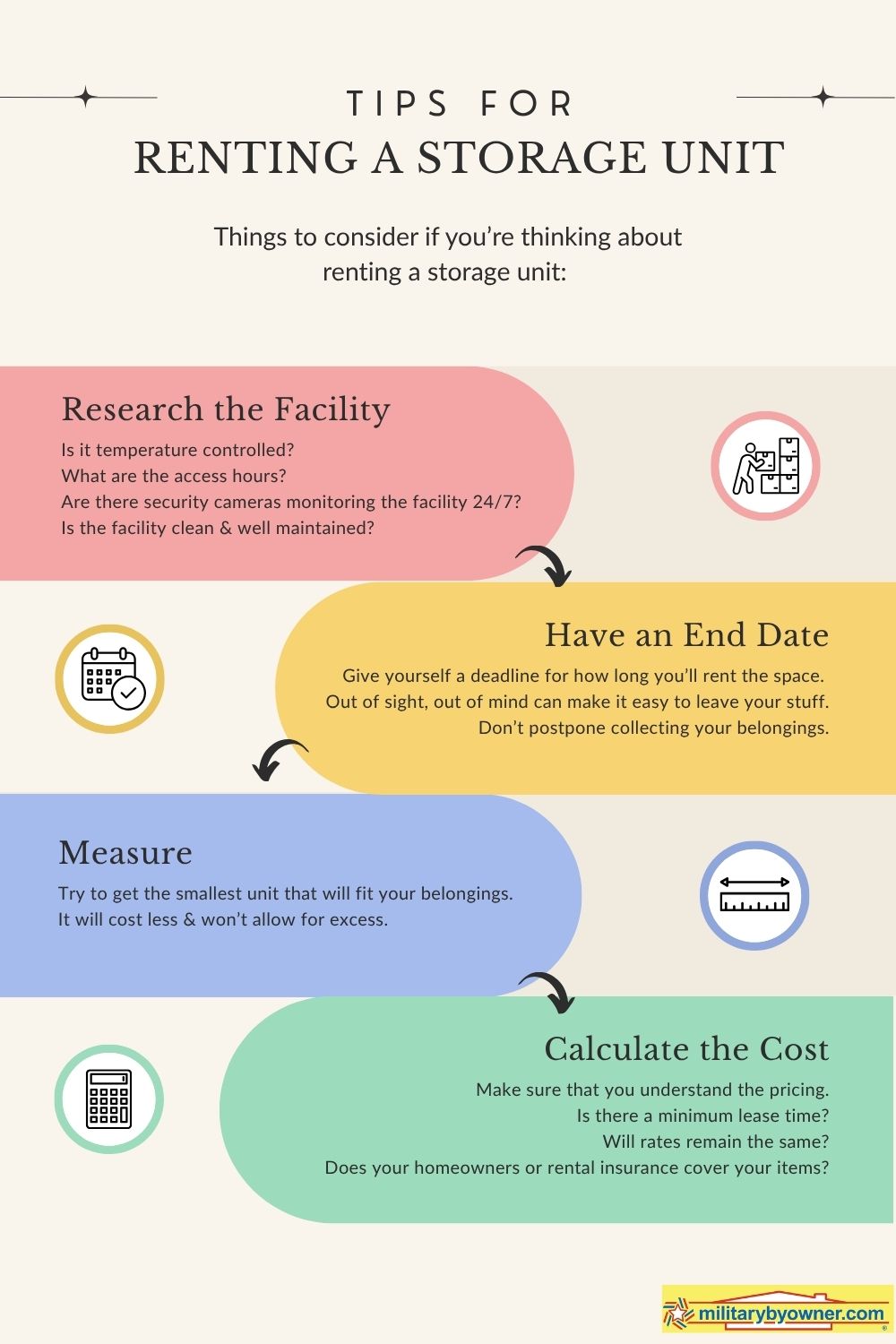
Tips for Using Long-Term Self-Storage
If the government denies an NTS application, some service members may choose to store their belongings themselves. Following are some tips for long-term self-storage.
Choose a climate-controlled facility.
Renting a unit that offers protection from the elements can help prevent wooden furniture, electronics, photos, and upholstered furniture from heat and humidity.
Purchase insurance for your stored belongings.
Unlike NTS, which the government protects at Full Replacement Value (FRV), self-storage should be covered by an insurance plan that accurately covers the value of the household items being stored.
Pack appropriately.
Not only should items be packed well, but organization within the unit is important too. Lining the floor with pallets or buying storage tubs are great ways to get belongings off the floor and protect them from insects, excess dust, and potential flooding.
Don’t use plastic bags.
Wrapping in plastic traps humidity and breeds mold and mildew. Instead, use paper, sheets, or drop cloths to protect your things and allow air to circulate.
Create a digital inventory.
Photos and a spreadsheet detailing items placed in storage help with insurance claims, for both self-storage and NTS.
Other tips to make the most of long-term storage space:
- Use a vacuum sealer. Although vacuum sealing soft goods won't reduce storage weight, it does protect winter clothes and bedding from the elements and creates more space.
- Disassemble furniture. Consolidate belongings to fit into a smaller unit and save money. Break down cribs, bed frames, and tables when possible.
- Label. Label the contents of each box before storing. It’ll make finding specific items easier when retrieving them from storage.
- Cover with fabric. Cover furniture with a sheet to protect it from dust. Go for 100% white cotton material, as it's gentle and won't transfer color onto upholstered items.
Every PCS military move requires a series of trade-offs, and deciding what stays, what goes, and what gets stored is one of the biggest. Whether a service member is entitled to government-funded NTS or pays for storage themselves, the goal is the same: to make the next move easier without holding onto more than what’s truly necessary.
MilitaryByOwner has helped military families navigate housing and relocation decisions since 2000. Explore additional PCS resources, military housing guides, and relocation tools designed specifically for military life.
Need more tips for an upcoming overseas move? Click below to download MilitaryByOwner's free Overseas PCS Survival Guide, where you’ll find answers to all your overseas PCS questions.
Looking for information about your next duty station? Browse our Military Base Information Guides for housing, schools, local amenities, and relocation resources.
back to top