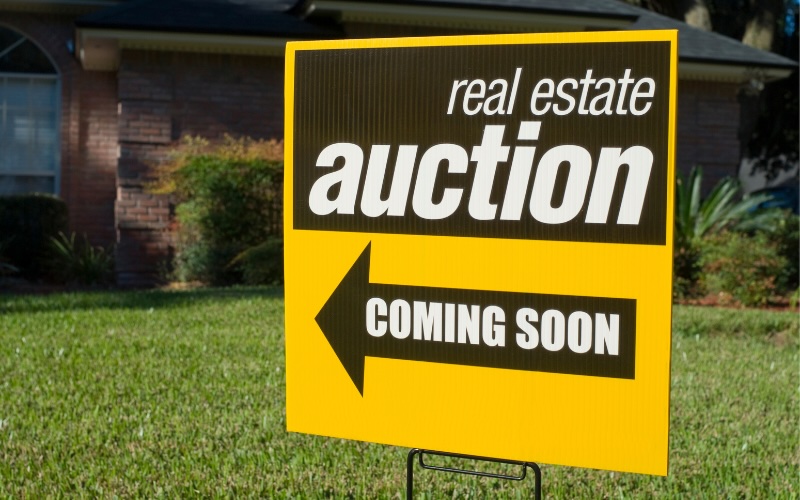
Photo by KLH49 from Getty Images via Canva.com
In this article:
Over the last several years, creative and sometimes desperate military home buyers have considered buying a house at auction as housing inventory tightened across the country. While buying a home at auction can be difficult and expensive after repairs and updates, seasoned buyers often see the potential for a good return.
Given the growing popularity of home sale auctions, now is the time to learn about the process. Preparation is key when choosing to embark on an auction adventure in the future. So, for those curious, here’s what to know about buying a home at auction.
Why Homes End Up at Auction
A common myth about homes for sale at auction is that they’re all foreclosures, but this isn’t always true. For example, in the event of a divorce or death, it may be beneficial to sell quickly at auction, even if it means not quite reaching the desired price. Other homes go to auction because the homeowner wants a fast sale, which, in military life, can be the optimal option.
Not all homes go to auction for convenience. Some houses are auction-bound after entering the foreclosure process for various financial reasons, often during a recession. Also, military homeowners sometimes find themselves in a challenging position with the potential for an auction sale when a PCS forces a move, and they cannot sell their home for what they owe, a frequent result of declining property values.
Other properties were auctioned off because the government claimed them due to unpaid taxes. This doesn’t happen regularly, though, because there’s a market for unpaid tax bills. In some areas, investors purchase tax liens, hoping to cash in on the repayment with interest (or the property itself) at a later date.
Types of Home Auctions
According to the National Association of Realtors, there are three types of auctions. Auctions can be held in person or virtually, and with or without a minimum price.
Primary types of home auctions:
-
Absolute Auction: There is no minimum set price, and a sale is guaranteed (provided there is a single bid, of course).
-
Minimum Bid Auction: These home auctions function pretty similarly to auctions for any other good on eBay. In this case, a buyer can set a minimum bid, and the home doesn’t sell unless that minimum is reached.
-
Reserve Auction: This auction method offers the most security for the seller, as the seller sets a minimum bid and reserves the option not to sell if the maximum bid is not acceptable.
How to Purchase a Home at Auction
If buying a house at auction sounds appealing, prepare to take on a lot of research and all of the legwork to find a worthwhile property.
Most auctions follow a similar process: buyers register in advance, are prepared to provide a deposit if they plan to bid, and bid either in person or online within a set timeframe.
Who operates auctions, when they’re held, and how they’re conducted varies by location. The one constant to rely on, however, is that buyers need cash or immediate access to funds to bid on an auction property, often including a deposit at the time of bidding and a short closing timeline. Many auction sales are final and don’t allow traditional contingencies, so buyers should proceed with caution.
Since foreclosures make up a large portion of auction properties, it helps to know where to find them and how they’re sold. Foreclosed homes are listed in several places, including the HUD website and other government real estate sales and auction websites, like Fannie Mae. Also, check county or city-specific websites and local MLS systems.

Photo by Karola G from Pexels via Canva.com
How to Buy a Home at Auction Without Cash
It’s difficult to buy an auction home without cash, but there are other financing options to consider. One option is to apply for a hard money loan. Private lenders and companies offer these; they depend on the property’s value rather than the borrower’s income. House flippers use hard loans because loan terms are short, approvals are quick, but interest rates are high.
If a hard money loan is an option, keep in mind that interest rates can easily reach 12% or higher, with daily interest accruing. And these types of loans are really geared toward seasoned house flippers with a successful sale track record and a comprehensive list of available contractors who work on quick turnarounds.
Financing availability, timelines, and requirements vary by auction type and location.
What Should Military Members Know About Buying a House at Auction?
Though selling a property at auction may be a fast fix for a military family, buying may not be, mostly because it's challenging to come up with the full amount of accessible funds.
The VA loan is often the first go-to financing for military buyers, but it is rarely compatible with auction purchases due to strict timelines and property condition requirements.
Using the VA Loan on a Foreclosed Property
One common question military and veteran homebuyers have is, Can I use my VA loan on a foreclosed property?
It is possible to use a VA loan to buy a foreclosed property, because not all foreclosures go to auction, but it's challenging because the property must meet Minimum Property Requirements (MPRs), and foreclosed homes are often in disrepair and don’t meet the MPRs.
“Auction properties are sold to the highest bidder and move very quickly, as the buyer is required to pay cash, usually on the same business day. Auction properties will not be a viable option for those looking to use a VA loan. However, properties that are now owned by the lender or agency as REOs could be. A VA loan can be used to buy foreclosures, but in order to qualify for the loan, the property must meet VA Minimum Property Requirements (MPRs) to ensure the home is safe, structurally sound, and livable.” –Kristi Adams, Buying a Foreclosed Home with a VA Loan
Risks to Consider Before Buying a Home at Auction
Assuming the financing and legal challenges work out (two of the biggest reasons most prospective investors stay out of the auction game), another major drawback remains: Many auctioned homes have serious problems.
A property that went to auction due to foreclosure or death is at high risk of maintenance-related negligence stemming from a lack of funds, a lack of care, or both. It's also common for the homeowner to have intentionally damaged a property that went into foreclosure.
Foreclosed homes are notorious for a wide variety of damage, from electrical damage to graffiti and deeply damaged walls. At the very least, it's common for homeowners or looters to steal appliances, cupboards, sinks, and anything else that could either be sold or repurposed.
Legal Concerns When Buying a House at Auction
Real estate is fraught with potential legal issues. Consider these four major legal concerns if you purchase a home at auction:
1. If the homeowner is deceased.
The mortgage payments stopped, and the home ultimately ended up at auction at the county courthouse. Estate ownership rights from family members might complicate this scenario.
2. Tenants are currently living in the house.
Tenant/squatter's rights (state laws differ) are real, and it's difficult to evict people who’ve lived there while the previous owner did.
3. The property has liens against it for a second mortgage, unpaid HOA assessments, or unpaid tax assessments.
A real estate lawyer and title company can help determine which, if any, of these are valid.
4. The homeowner may have the right to reclaim the property.
Some states, such as Georgia, allow a right of redemption period, which means the homeowner can reclaim the property if they repay the amount paid on the property at auction, plus interest. The redemption period varies significantly by state and can range from none to up to a year or more. States like California do not have a redemption period.
Where to Find More Information About Buying a Home at Auction
If the cash investment, inspection concerns, and legal issues haven’t deterred interest in buying a home at auction, here’s where to find out more.
- Research: Check with the local courthouse and read the newspaper to find information about homes available through auction.
- A real estate agent: Some real estate agents take on auction sales. In the past, auctions represented only a niche market dominated by a few agents, but this area of real estate continues to grow.
- A real estate attorney: DIY auction buying requires an experienced real estate attorney to avoid tenuous legal problems.
Buying a home at auction isn’t a decision to make lightly. It's often a process that may not align with the timelines or financial structures military buyers rely on. Legal protection is paramount for auction homes. Invest in a team of real estate professionals who have years of experience and have the buyer’s best interest at the center of the transaction.
By Dawn M. Smith
back to top