 Photo from Monkey Business Images via. Canva.com
Buying is often favored over renting when it comes to housing. For some, renting is considered “throwing money away” while buying is an “investment.” The truth is, the answer to the rent-versus-buy question is much more nuanced than this one-size-fits-all approach. It’s more like “which size fits me?”
Buying a Home, with a Plan
Ultimately, think about what your goals are—not just for where you live, but your entire financial picture. Homeownership can give a great sense of control and security, but there is a massive financial investment required that might not be the best choice for you in the long run. Reasons people buy a home:
- Buy to sell
- Buy to invest
- Your forever home
Location
Is the home in a growing or declining area?
While knowing whether a market is more favorable to buy or rent is useful, it isn’t the only market consideration. A neary military installation is great for service members, but what else is keeping a market strong?
There are three telling clues that can help reveal the economic sustainability of a market. Expansions in any of these areas signal an increase in population growth, jobs, and an increased demand for services and housing.
The Three "Eds"
Eds: If you're moving to an area that is also home to universities and colleges, are they attracting students and creating new programs and facilities? Is the average freshman class increasing or decreasing in enrollments?
Feds: The federal government spends a significant amount of money on market research before any decision involving real estate is made, through the General Services Administration (GSA). In short, the GSA is the real estate arm of the government, including constructing, managing, leasing, and building preservation. The GSA also has an online newsroom, making it easy to see markets and locations where money is being spent or scaled back for real estate-related endeavors.
Meds: Healthcare and hospital expansions don't exist without staff and patients; thus, an increase in the medical care of a community signals existing and anticipated population growth. Additionally, healthcare facilities are among the most expensive to construct, and an expansion signals market confidence that the investment will be worthwhile.
Related: Should Military Members Rent or Own a Home? What to Know Before Deciding
Other Factors to Consider
Your Financial Situation
- Savings
- Debt-to-income ratio
- Credit score
- Down payment or going with zero down
Loan Options
VA loan points for purchase loans must be paid at the time of closing. So even though you're required to make a down payment on a VA loan, choosing to pay for discount points will add to the closing costs required to buy the home.
Learn more about home loans: How to Compare Loan Options as a Military Homebuyer.

Image from chereezoff from Getty Images via Canva.com
Renting a Home
Rental home markets remain strong near military bases across the country. This occurs for many reasons, including the aforementioned short timelines for living in a home and the ability to choose a home based on personal priorities including public schools and transportation.
Renting is a good option if you value flexibility, low maintenance living, and the ability to spend your money on other things like investing or travel. Some military members are required to live on base and rent—for instance, designated housing for key and essential personnel.
Although renters don’t build equity, many don't view rent as a waste. They are, after all, supplied month after month with the housing solution they’ve chosen, with fewer upfront costs and little to no upkeep and repair fees. The relationship between the tenant and landlord is key to having a happy situation.
Related: 10 Reasons Not to Sign a Lease
When Renting Makes Sense
- Desire to live on base or job requires you to live on base
- Military member deployed. The spouse may not want the responsibility of the maintenance and upkeep of owning a home.
- Desired location out of price range. For example, when you want your children to attend a specific school and the neighborhood is out of price range.
- No desire to become a landlord. If you can't sell the home later or the market turns, you may need to rent out your home when you PCS. Many people choose this life as a means to create a passive income and financially prepare for the future. But it’s one thing to be an intentional landlord and another entirely to fall into it.
Mortgages are always thought of as being cheaper than monthly rent. It's not always the case since your mortgage depends on the location, mortgage rates, property tax, the condition of the home, HOA fees, and more.
Learn more: Tips for Military Members Renting Their First Home

Photo from PrathanChorruangsak from Getty Images via. Canva.com
The Numbers
There are many home-buying calculators online. It's recommended to try at least three because each is nuanced in how it presents its findings and estimates.
Try these three to investigate possibilities:
Cost of Renting vs. Buying a $300,000 Home
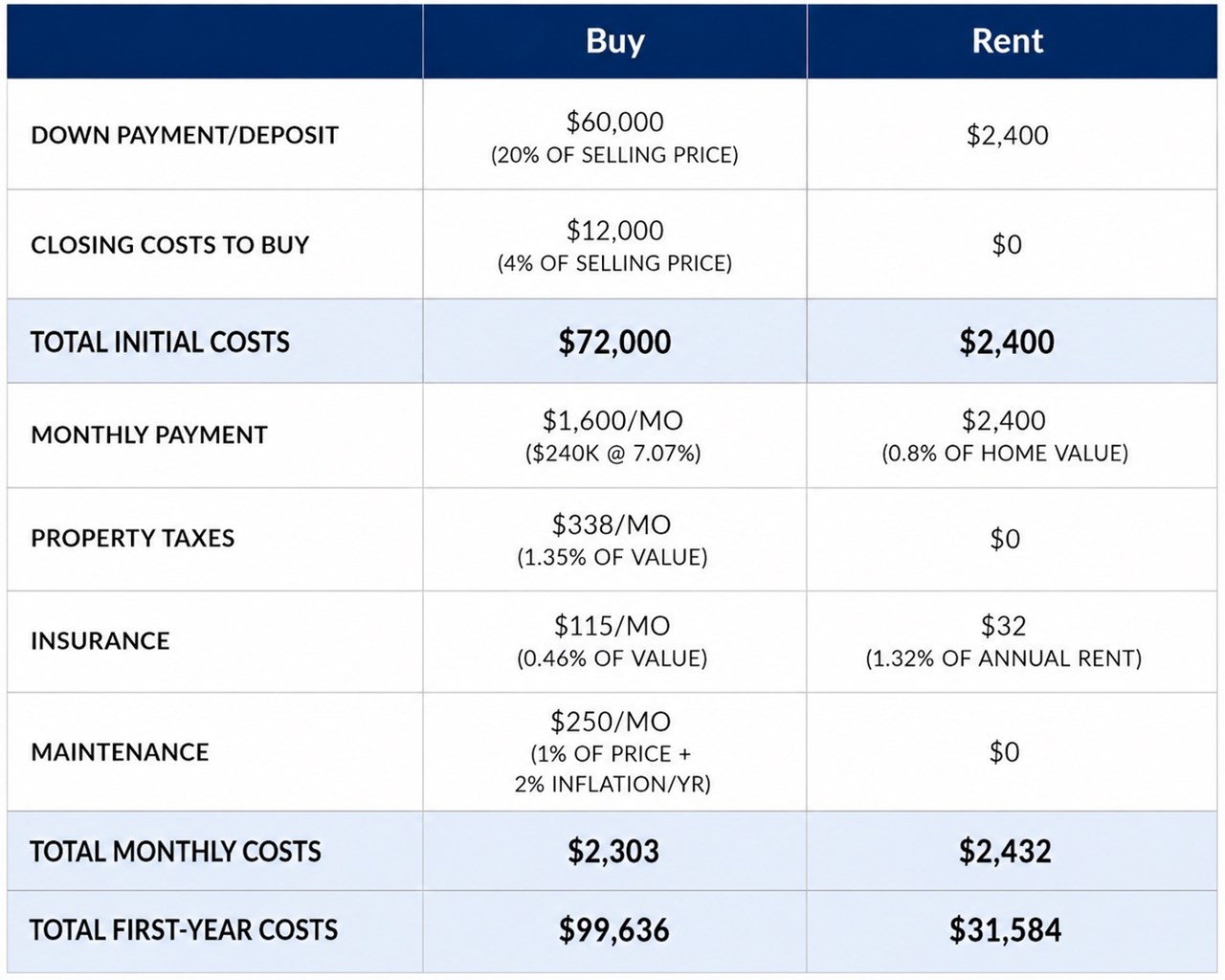
In the end, the rent versus buy decision comes down to your preferences, plans, and personal finances. If you know how long you plan to stay in a home, where you want to live, and have some money saved, the decision may be as simple as comparing the costs of each option.
If your future plans are less certain, however, there may be additional factors to weigh before deciding whether renting or buying a home is the better fit.