
Photo by Latino Life via Canva.com
What you’ll find in this article:
For military families, homeownership carries unique opportunities and challenges. While it can bring stability and financial advantages, the realities of deployments, PCS moves, and family circumstances make the experience very different from civilian life.
Why Military Members Choose to Own a Home
Many service members decide to buy a home because they want to invest in something tangible. A home can serve as a long-term anchor for those wanting to return to the area, giving their children consistency in schools and spouses a community to connect with. Financially, the VA home loan makes buying more accessible by removing the down payment barrier and offering competitive rates. For some, the appeal lies in building equity before selling. For others, it’s the opportunity to generate passive income by turning the home into a rental property when it’s time for a PCS move.
The Challenges of Military Homeownership
Owning a home while serving in the military often comes with added layers of complexity. Deployments may leave your spouse managing and tending to the property alone. Or, if you become a “geo-bachelor” (geographically separated on temporary duty), there’s a sudden divide in cost of living. While the family behind manages the finances for the home, the service member has additional housing expenses at their new assignment. Can the finances support it?
Inevitable PCS orders every few years add another challenge: deciding whether to sell, rent, or answer the question, “What do I do if my home doesn’t sell?” While these decisions can arise in any path in life, the military adds a level of force and inflexible timelines that can make these choices more challenging. Unlike some homeowners who can wait for the perfect offer, a military member probably can't. With orders in hand, the expenses at the next duty station won’t wait. This rush can cause members to become “accidental landlords” or lose equity in order to execute a short-term sale.
Looking Ahead: Deciding Whether You'll Sell or Rent
Homeownership is a challenge for military buyers who endure regular PCS cycles. Buying a house with a semi-guaranteed plan of a three-year tour in one city is a purchase made with a giant leap of faith.
Due to the uncertainty, one of the most important questions to ask is, “Will I sell or rent my house after three years? A contingency plan is also a good idea.
Determining whether to sell or rent dictates the improvements and changes you’ll make to the property. After all, perfecting the house to the point of pricing it too high for your neighborhood’s typical buyers and renters doesn’t offer a return on your investment.
As you read about the differences between the strategies for selling or renting your home after living it for only a few years, you’ll note that many of the improvement qualities buyers prefer are also the amenities renters prefer. This is important to remember when considering the sale or rental of your property. The right projects will attract both crowds and, if priced correctly, will earn the most money.
While hunting for a house that fits your needs right now, it’s also important to think of the resale appeal for later. Even though you hope to stay at this assignment for a few years, you’ll eventually transition again. When your next military orders come along, it helps to have a plan for what you’ll do with your home. Would you rent or sell your home?
Pros and Cons of Selling or Renting
The pros of renting the house:
- The property could appreciate.
- Tax benefits of owning an investment property.
- Rental income could offset some homeownership costs.
- A rental property can generate passive income.
The cons of renting the house:
- Cost of repairs and maintenance.
- Possible tax concerns over selling a property previously used as a rental.
- The tenants may not be conscientious about the upkeep.
- Unreliable income if there’s a gap between tenants.
The pros of selling the house:
- Any equity in your current home can be rolled into your new home purchase.
- The capital gains from the sale would be virtually tax free if you put it toward another home purchase.
- The ease of owning only one home at a time.
The cons of selling the house:
- A qualified buyer may be hard to find.
- The house could sit empty after you PCS.
- Loss of potential appreciation if you instead held the investment for a few years.
6 Ways to Safely Secure Your New Home offers helpful first-time homeowner tips, along with the home buying section of MilitaryByOwner's blog.
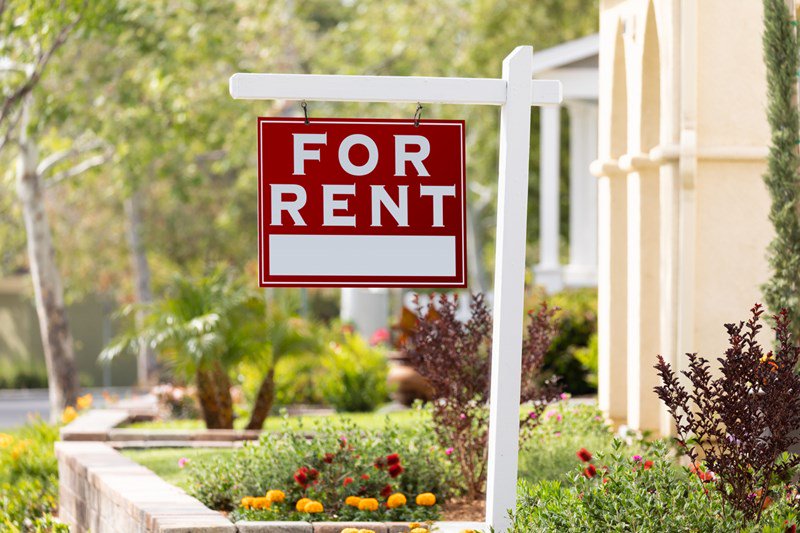
Photo from iStock.com/feverpitched
If You Plan to Rent Your Home After Your PCS
What are the reasons you’re planning to rent your home? Is it because it's not a good time to sell in your market, i.e., prices are low and inventory is high? Or are you holding on to the property because you’ll ultimately return, either to retire or for another PCS cycle? The answers to these questions form the framework for your home's improvement plan.
VA Loan Requirements to Remember
If you purchased your home with a VA home loan, remember that you have to meet VA loan requirements before converting the house into a rental property.
- You must reside in the house as your primary residence for at least 12 months.
- Or, you can rent the house to tenants earlier if you live in a multi-unit property and you reside there permanently.
- The portion of your VA home loan entitlement used to purchase the house stays with the house until the loan is paid off.
Home Improvements for a Rental Home
Required Standards to Maintain
If you’re renting out a property, you're obligated by law to meet health and safety standards throughout the home. Local governments generate the specifics. You’ll have to educate yourself on what your county and city mandates, but at a minimum, you’ll need to correct problems with structural elements of the home, including floors, stairs, walls, and the roof.
The good news is that if you used a VA home loan to purchase your house, there were VA loan requirements, also known as minimum property requirements, that the property needed to meet before you could make the purchase. So, it's likely that many of the major safety conditions were met.
These systems are also required to be operational:
- Electrical
- Heating, ventilation, and air conditioning
- Plumbing
- Remediation of environmental toxins such as mold and lead paint
- Extermination of rodent infestations
- Reasonable barriers against crimes: a working front door with a lock and landscaping that restricts the potential for hiding places for criminals
Rental Home Improvements that Earn Value
Part of your rental property preparation is defining the ideal renter you’d like to have occupy your home. These characteristics determine the type of improvements, upgrades, and additions that will draw in your preferred price point.
Note that Fair Housing Laws prohibit discrimination against protected classes of potential renters. It's unlawful to refuse a tenant for unfounded reasons such as race, class, or religion.

Photo by sturti from Getty Images Signature via Canva.com
What Tenants Want in Your Rental Property
Renters typically want what buyers want, but many will put up with a few shortcomings like dated paint and wallpaper for a reduced rent price, knowing they’ll live there temporarily.
Most of the following changes will not only entice tenants who prefer to pay top dollar for a well-maintained property, but they'll also enhance a future home sale or improve your quality of life upon moving home.
- Updated flooring. Dated, smelly carpets deter renters quickly, but hardwood and engineered wood planks remain the most popular choices in flooring and are more affordable than ever. Wood-look flooring is far more durable and easier to clean than cheap carpeting.
- Modern and well-functioning kitchens and bathrooms are also at the top of the list to increase your home’s value. If you plan to eventually install stone countertops in the bathroom and kitchen, either to sell or enjoy for yourself, consider installing them earlier to capture renters’ attention and potentially higher rent prices. Wear and tear on natural stone, such as granite, is nominal across a two- to three-year lease. The same is true for updated appliances and small hardware, like faucets.
- Low-maintenance landscaping benefits both tenants and homeowners. The garden of your dreams can wait until you can care for it on a day-to-day basis. Most renters are not interested in investing time and money into yard work.
- The majority of renters prefer a fenced yard for the safety of their family, including their pets. A privacy fence is even better.
- Consider affordable, smart, or green home improvements that are attractive to renters, such as a wireless programmable thermostat, LED light bulbs, and Bluetooth keypad door locks. They’ll appreciate the cost-per-month savings and the benefit of modern technology not usually found in a rental.
Decorating with Tenants in Mind
Certainly, your home should be comfortable and enjoyable while you live there, but your decorating choices may differ if your long-term plan involves renting or if you plan to sell after three years.
Highly personalized paint and wallpaper choices, for instance, can make a property harder to sell or rent. The goal is to cater to the masses and secure the best prices for your rental.
Also, skip custom fabric window coverings. These are taste-specific, expensive, and likely the first items a renter will remove and store after moving in. There are affordable yet high-quality alternatives, such as plantation shutters, which are widely available at home improvement stores.
Popular Paint Color Options
The colors beige, greige, and off-white are often perceived as boring and lacking personality by some homeowners, who view this category of paint as uninspiring. But the easiest way for potential renters to envision themselves and their belongings in the home is against a neutral backdrop.
If three years is just too long to live with bland paint, consider a color with neutral tendencies, such as blue-gray, green-blue, or a light brown-buff. These colors accommodate most decorating themes.
back to top
Renters Insurance
You’ll need to convert your homeowners insurance into rental property insurance. It’s also highly advisable to include lease language that requires tenants to purchase renter's insurance to cover their belongings in the event of a disaster.
Insurance Coverage for the Tenants
Remind your tenants that the landlord’s insurance policy doesn't cover their belongings, and requiring them to purchase a policy is a protection for everyone.
Check out this common myth about renter’s insurance from Renters and Landlord Insurance: Don't Get Burned!:
"'If someone gets hurt in my house/apartment, the landlord is liable.' Not necessarily true: This is a question of liability. Should your cable guy trip on the front walk, he will probably sue your landlord. But if the repairman takes a swan dive over a poorly positioned coffee table inside your apartment or if your Doberman decides that his ankle looks like a chew toy, it will not be your landlord's problem. It will be yours."
Learn more about renters insurance: 5 Reasons You Need Renters Insurance.
Insurance Coverage for the Landlord and Rental Property
Typical coverage protects the house and outbuildings, like a garage, from weather and fire damage. More inclusive and expensive policies encompass scenarios that protect the owners from income loss if the house is inhabitable or if there is a dispute that requires legal action. The insurance provides liability coverage for injuries, legal fees, and medical costs if necessary.
Rental Home Records to Keep
Set your renters up for success by gathering the information to keep your house running smoothly. They’re more likely to care for the property the same way you would if they’re informed and prepared. The simplest way to organize and present the information is to create a binder or digital collection of essential documents.

Photo by Anete Lusina from Pexels via Canva.com
1. Warranties and Manuals
Include home warranty policy numbers and contact information, appliance guides, landscaping system instructions, and smart home features.
2. Maintenance
Add the names and contact information of preferred handymen and vendors that supply home services, such as plumbers and electricians. Also, include the maintenance plan schedule that was agreed upon in the lease, which outlines how often and when you expect house chores to be completed. These items typically include lawn care, gutter cleaning, chimney sweeps, and window washing.
3. Rental Property Tax Records
As a rental property business owner, taxes will become a part of your overall tax preparation for the year. Choose a system for documenting the property’s income and expenses. A simple log on a spreadsheet usually suffices for one property, but there are more sophisticated management systems if preferred. Receipts pile up quickly if you don’t have a digital way to record them. At a minimum, take pictures of the receipts and store them for later.
If You Plan to Sell Your Home While in the Military
Maintaining an active and open line of communication with a real estate agent is the simplest way to plan for a future sale. They’ll guide you through which improvements are most valuable in your area and offer monetary guidelines that offer the biggest return on your investment without pricing out of the local market.
Home Improvements that Earn Value
If your main goal is to profit from a future sale, clear financial data will show you which projects are worthwhile. Read The Journal of Light Construction’s yearly Cost vs. Value Report. It’s a solid source for gauging which improvements are the best investment in your area.
These are the projects mentioned year after year with the highest return on investment.
- Garage door replacement
- Manufactured stone veneer
- Siding replacement
- Window replacement
- Deck addition
- Entry door replacement
Check the report for your region and state, as location makes a difference, especially for exterior improvements. This information is in conjunction with hyper-local information for your city and neighborhood. In the end, meeting buyer demands closes the sale.
Learn more valuable home improvements:
Decorating with a Home Sale in Mind
For military homeowners, the idea of decorating any way you want is often a large part of the decision to buy a home. Without the restrictions of a rental, the options are endless—unless you plan to sell the house in three years and earn a profit.
Of course, you should make any changes you prefer while living in your home. Have you always wanted a 1950s-inspired kitchen with red accents? Go for it, but know that a limited pool of buyers will appreciate the aesthetic. You’ll likely be repainting the kitchen Benjamin Moore’s Simply White while packing for the next PCS.
You get to decide how much personality you want to live with, but ultimately, catering to homebuyer’s tastes is what brings the desired asking price.
Decorating with selling in mind is similar to decorating with renting in mind. You’ll want to add finishes that lean toward a high-end look and appeal to the masses to achieve maximum profit on the sale.
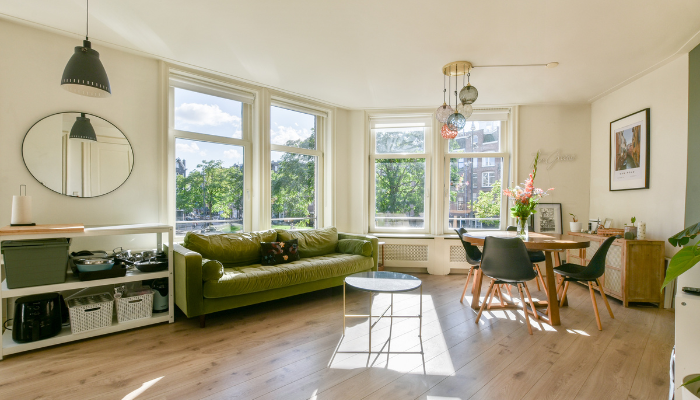
Photo by Pro Creators via Canva.com
Home buyers continually ask for:
- Light, bright, and airy: Update light fixtures and install breezy window coverings that offer privacy.
- Open concept: Remove non-structural walls that inhibit sight lines and obstruct flow.
- Move-in ready: Immaculately clean, with neutral paint and limited carpeting. Hardwood flooring is overwhelmingly preferred, as are stainless appliances and natural stone countertops.
Energy-Saving Options
Newer homes are equipped with energy-efficient features, including low-emissivity glass windows. However, there are opportunities to add additional savings after the home purchase. Your future buyers will be impressed with the savings they’ll receive from energy-efficient upgrades to the furnace, boiler, and air conditioner.
You can safely assume that, if these systems are over 15 years old, there’s room for efficiency improvement. New thermostats, ceiling fans, and additional insulation also increase energy savings. Think carefully about intense updates such as solar paneling. These attract a particular set of buyers your market may not support.
Keep in mind that some energy-saving features may also reduce homeowners’ insurance costs. If the upgrade prohibits damage and future payouts from the insurance provider, the chances are higher for a reduced rate. Typical options include water shut-off devices, a new roof, and superior windows.
A three-year PCS timeline strains the home buying process for military families. To make the most of the purchase for such a short time, create a plan. Both a sale and a conversion into a rental property are possibilities, but your future goals predict which is the preferred exit. If the primary goal is to maximize profit from the final sale or through monthly income, carefully consider which improvements and action plans best fulfill this intention.
By Dawn M. Smith
Selling your home? Download our free guide below!

back to top