
Photo by SHVETS Production from Pexels via Canva.com
In this article:
Updated 2026
Over the course of a few PCS moves, most military families develop a moving system that works well for their household. No matter the approach, there are options for completing a Permanent Change of Station (PCS) move.
Some military members prefer to let government-contracted movers handle everything, while others choose to take a more hands-on approach through a Personally Procured Move (PPM). Understanding how each option works can help make the decision easier.
The Difference Between Military Movers, Full PPM, and Partial PPM
The government will coordinate professional packers and movers for eligible household goods. In this scenario, the service member is only required to remove things like hanging shelves, frames, and curtains from the wall to allow the hired movers to pack household goods and load for transportation. This method is the least expensive and hands-off approach for PCSing military families. But military members also have the option to complete a Personally Procured Move (PPM), formerly known as a DITY (“do it yourself”) move.
With a full PPM, the military member arranges the entire household goods move rather than using a government-arranged mover. The family may complete the work themselves or hire a moving company or other service.
In a partial PPM, the member personally arranges packing and transportation for part of the shipment while government-contracted movers handle the rest.
Note: The Department of War generally does not recommend or approve full PPMs for overseas moves. See our detailed resource for OCONUS PCS moves.
Full vs. Partial PPM: Which Is Right for Your Military Move?
The right choice depends on the distance of the move, available help, budget, and how much work the family wants to take on.
A full PPM often makes sense for shorter-distance moves or for families who have friends or relatives available to help with loading and unloading. It also provides the greatest opportunity to maximize reimbursement since the government reimburses eligible PPMs based on what it would have cost the government to move the authorized household goods using a commercial carrier. Families who are comfortable driving a moving truck and handling the logistics themselves may find that the extra work is worthwhile.
A partial PPM is often the better fit for longer PCS moves or for families who simply don't want to handle every aspect of moving. Instead of transporting an entire household, many choose to move only high-value, sentimental, or immediately needed items while allowing government movers to handle the bulk of the shipment. This approach still provides an opportunity to earn reimbursement while significantly reducing the physical work involved.
The best choice depends on each family's priorities, schedule, and comfort level.

Why Military Families Choose a PPM Move
At first glance, handling an entire military move independently may seem like more work than it's worth. However, many military families intentionally choose a PPM because it offers benefits beyond the potential financial incentive.
Opportunity to Earn Reimbursement
One of the biggest reasons families choose a PPM is the opportunity to receive reimbursement that may extend beyond the actual costs to move their household goods.
Rather than paying a flat amount, the government estimates what it would have cost a contracted moving company to move the household goods. That estimate is based on several factors, including the military member's authorized weight allowance, the distance between duty stations, current government transportation rates, and the type of move being completed.
Greater Control Over Belongings
The financial component isn’t the only reason military families choose a PPM. For many, having complete control over the moving process is important.
Handling the packing gives the military member and family complete control over how household goods are organized. Instead of relying on movers to decide what goes in each box, essentials like kitchen supplies, bedding, toiletries, and children's items can be packed together and loaded strategically so they're among the first things unloaded at the new home. That can make settling in much easier after a long PCS.
Beyond organization, a PPM can provide peace of mind knowing that important belongings are secure, as it reduces the risk of fragile or sentimental items being stolen, lost, or damaged.
Avoid Shipping Delays
One advantage of completing a full or partial PPM is having greater control over the moving timeline. Rather than coordinating around a moving company's schedule, military families can choose when to pack and travel and when their belongings reach their new home.
That flexibility can make an already stressful PCS feel much more manageable. A PPM also allows military families to settle into their new homes more quickly. Rather than waiting days or weeks for a household goods shipment to arrive, everything is immediately accessible.
For families with young children or those relocating during the busy summer PCS season, having immediate access to clothing, kitchen supplies, toys, and other everyday essentials can make the transition considerably smoother.
How PPM Reimbursement Is Calculated
The government currently reimburses 100% of the cost they would pay professional movers to relocate a service member’s household goods. The rate is often more if the government requires a service member to move themselves because they couldn’t secure movers to handle the move.
Because each military move is different, reimbursement varies from one move to the next. A longer move doesn't automatically result in a larger payment, and two families moving to the same installation may receive different estimates depending on their authorized weight allowance.
Your local transportation office provides military moving and DITY calculations before the move begins, helping military families calculate whether a full or partial PPM makes financial sense. If the move costs less than the authorized reimbursement, the remainder is a profit for military members, which often serves as a financial buffer for settling in at the next duty station.
In addition to the reimbursement itself, other moving expenses can qualify for reimbursement, including truck and trailer rentals, portable storage containers, packing materials, fuel, toll fees, hired labor, and certified weight tickets.
The reimbursement is based on rank, distance traveled, and the documented weight of the household goods moved.
Required documents for moving expense reimbursement:
- DD Form 1351-2: completed and signed by reviewing official
- PCS Travel Orders
- DD Form 2278: calculated by the Transportation Office
- Copies of certified weight tickets, including the gross (full) weight and one for the tare (empty) weight
- Operating Expense (OPE) worksheet: if attempting to reduce your taxable income
- Copy of paid rental agreement
- Copy of vehicle registration when utilizing POV and/or boat/trailer move (See JTR for details)

Photo by Caroline Voelker from baseimage via Canva.com
Common Misconceptions About PPMs
Many military families assume a PPM means doing every aspect of the move alone or believe it's guaranteed to result in extra money. Understanding what a PPM includes can make it easier to decide whether it's the right choice for an upcoming PCS move.
Misconception #1: A PPM Is All or Nothing
Choosing a PPM doesn't necessarily mean declining government movers altogether. Many families combine the two options by allowing professional movers to transport most household goods while moving a smaller shipment (a “partial PPM”). This hybrid approach offers greater flexibility and can help ensure important belongings arrive when the family does.
Misconception #2: A PPM Guarantees Extra Money
Military families may hear stories of friends who made money on a PPM, but every move is different. Reimbursement is based on factors such as authorized weight allowance, distance between duty stations, and current government transportation rates.
While some families complete their move for less than the estimated reimbursement, others may find that the convenience and flexibility of managing the move themselves are the biggest rewards.
Misconception #3: The Government Doesn’t Have to Approve a PPM
Military members must obtain approval before beginning a PPM in order to qualify for reimbursement. Speaking with the installation Transportation Office early in the PCS process helps families understand their options, estimate reimbursement, and determine whether a full or partial PPM is the best fit.
Get moving prep tips from seasoned military families.
Tips for a Successful PPM/DITY Move
A little planning goes a long way. Staying organized, understanding the reimbursement process, and preparing for the move before packing begins can help reduce stress and avoid costly mistakes. These tips can help military families make the most of a Personally Procured Move.
Start at the Transportation Office
The first step in any Personally Procured Move is meeting with the installation transportation office. Before making reservations or loading a truck, military members must receive approval for the move. During that appointment, the transportation office explains the process, provides required documentation, and offers an estimate of the expected reimbursement.
Ask About an Advance Operating Allowance
As some moving expenses, like a rental truck reservation, packing supplies, and shipping container transportation, must be paid before receiving reimbursement from the government, eligible military members may request an Advance Operating Allowance to help offset upfront costs.
Find Ways to Reduce Moving Expenses
Keeping costs low helps increase the odds of making money when conducting a PPM. Look for military discounts, keep track of the current weight allowances, book rentals early, reuse moving boxes, and use household items like blankets and towels to insulate fragile items.
Keep Important Documents Organized
Although a PPM involves several required documents, certified weight tickets are among the most important. They verify the empty and loaded weight of the vehicle, and are essential for calculating reimbursement. Keeping weight tickets, receipts, rental agreements, and other required paperwork together throughout the move makes the reimbursement process much easier and faster once the family arrives at the new duty station.
Plan Space Carefully
Before moving day, it's helpful to estimate how much space household belongings will require. Whether using a moving truck, shipping container, trailer, or personal vehicle, taking inventory beforehand helps prevent unpleasant surprises after loading begins.
Submit the Moving Claim
Once the move is complete, military members generally have 45 days to submit their PPM claim through the Transportation Office. The office will explain exactly what documentation is required, review the paperwork, and calculate the final reimbursement based on the completed move.
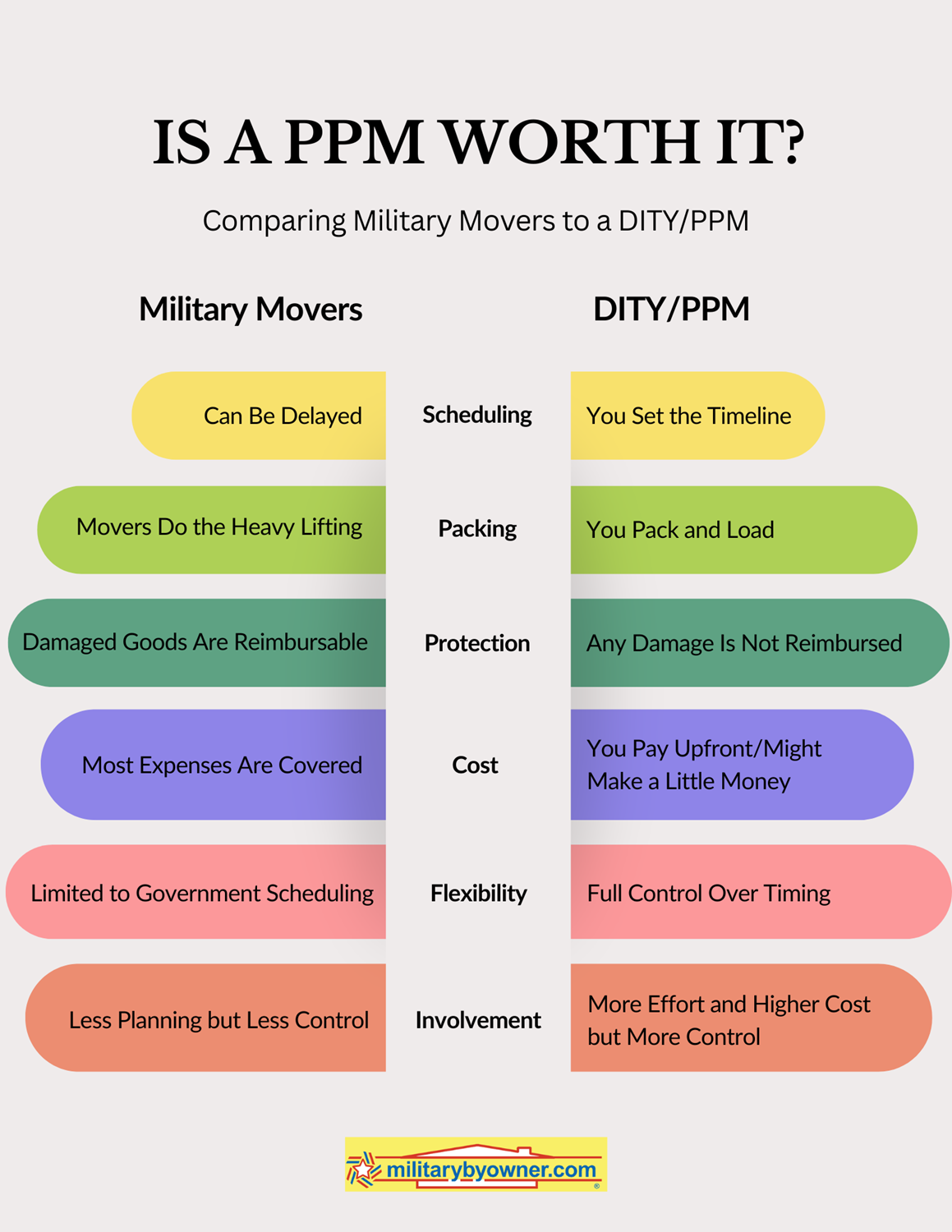
Is a PPM Move Worth It?
A Personally Procured Move isn't the right choice for every military family, but it can be an excellent option under the right circumstances.
A full PPM offers the greatest opportunity to maximize reimbursement while providing complete control over the moving process. A partial PPM delivers many of those same benefits with far less physical work, making it an attractive middle ground for many families.
Before making a decision, consider these questions:
- Does the potential reimbursement outweigh the time and effort required?
- Is there enough time to plan, pack, load, and complete the move?
- Is help available for lifting and loading heavy furniture?
- Is someone in the family comfortable driving a moving truck or towing a trailer?
- Are there enough savings to cover upfront moving expenses, plus fees like security deposits, after arriving at the new duty station before receiving reimbursement?
- Would a PPM provide peace of mind for valuable or sentimental belongings?
- Would a partial PPM offer the right balance of convenience and reimbursement?
- Is avoiding shipping delays of household goods to the new duty station a priority?
Questions Military Families Ask About PPM Moves
Is a PPM the same as a DITY move?
Yes. A Personally Procured Move (PPM) was formerly called a DITY, or “do-it-yourself,” move, and is still referred to that way by some.
How does a PPM (DITY) move work?
With a PPM or DITY, the military member arranges and completes some or all of the household goods move instead of relying entirely on government-contracted movers.
What’s the difference between a full and partial PPM?
With a full PPM, the military family handles the entire move, including packing, loading, transportation, and unloading. With a partial PPM, government-contracted movers transport most of the household goods while the family personally moves a smaller portion.
Do military members need approval before completing a PPM?
Yes. Military members must receive authorization from their installation’s transportation office before beginning a full or partial PPM to qualify for reimbursement. The office can also provide an estimated reimbursement amount and explain the required paperwork.
How is PPM reimbursement calculated?
PPM reimbursement is generally based on what it would have cost the government to move the authorized household goods with a commercial carrier. Factors include the service member’s authorized weight allowance, the documented weight moved, the distance between duty stations, and current government transportation rates.
Does completing a PPM guarantee a profit?
No, making money on a PPM isn’t guaranteed. Some military families spend less than their authorized reimbursement and keep the difference. Rental equipment, fuel, packing supplies, tolls, hired labor, and other moving expenses can reduce the final amount.
What documents are needed for a PPM claim?
Required documents may include PCS orders, DD Form 1351-2, DD Form 2278, certified empty and full weight tickets, rental agreements, receipts, and an operating expense worksheet. The transportation office can provide a complete checklist based on the type of move.
How long do military members have to submit a PPM claim?
Military members generally have 45 days to submit their PPM claim through the transportation office. Keeping weight tickets, receipts, rental paperwork, and other documents organized can help prevent delays in processing the claim.
Is a PPM Right for You?
Some military families value the convenience of government-contracted movers, while others prefer the flexibility, control, and potential financial benefits of a full or partial PPM. Understanding the available options early in the PCS process can help families choose the method that best fits their budget, timeline, and priorities.
Click the image below to download "Is a PPM Worth It?" as a PDF. (PDF will open in new window, simply right click and save.)
MilitaryByOwner has helped military families navigate housing and relocation decisions since 2000. Explore additional PCS resources, military housing guides, and relocation tools designed specifically for military life.
back to top